
Şehnaz Melisa AcarT., Elif Nur ÖzcanE.
The field of biomimicry, which can also be defined as the transfer of functions from nature to technology, is the source of new research in many different fields such as material science and architecture, computer science, and robotics. In recent studies, scientists have contributed to the development of biomimetic robots inspired by different creatures that existed in the animal kingdom (Figure 1)4.
People have been inspired by nature while making their designs for centuries. Observing and understanding the objects that are present and the events that are taking place in nature is cited as a source of many designs made at present. Many terms are used to describe this systematic approach, which is called “learning from nature”1. When most of the sources written in the past years are examined, the purpose for these mechanisms to be applied to the existing technology is mentioned a lot. In 1957, Otto Schmitt said the following about the science of biophysics: “Biophysics is not a science about human perspective. It is a branch of science that deals with problems in biological science using the technology and theory of physical science. Besides, biophysics is a branch of science that deals with the approach of biologists to problems in engineering and physics. However, this aspect of biophysics is largely ignored.” In addition to these words, Schmitt, who also referred to the term biomimetic is also known as the scientist who invented the biomimetic approach2.
Biomimicry is an interdisciplinary field of study that tries to design systems or materials using an innovative approach3 that aims to bring sustainable solutions to the complex problems of humans by examining and imitating models in nature. It is derived from the word bio, meaning human life, and the word mimesis, meaning imitation2. Biomimicry covers many fields of study and has an impact on a wide variety of applications. For this reason, it is considered to have a social, economic, and especially scientific impact on quality of life1.
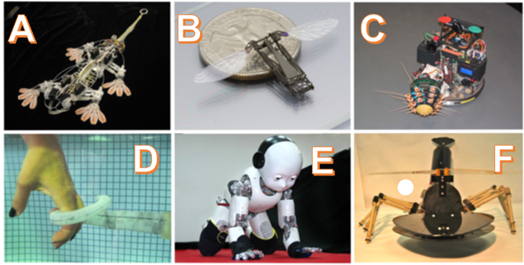
Figure 1. Examples of biomimetic robots4. (A) Stickybot was inspired by Geko (House Mottles) developed at Stanford University. (B) Insect-inspired micro-aircraft developed at the Harvard Microrobotics Laboratory. (C) A rodent-like, whiskered robot developed at the Bristol Robotics Lab. (D) Robotic octopus tentacle developed at the University of Pisa. (E) iCub, a child-inspired humanoid robot developed at the Italian Institute of Technology. (F) The lobster robot was developed at Northeastern University.
Studies in the field of biomimicry are thought to be limited. The lack of an apparent method, the difficulties of interdisciplinary studies, and the complexity of the models in nature are shown as the main reasons for the limited studies. In addition, research areas have been fragmented in the studies conducted in this field, and most of the important results have remained in their fields. Since biomimetics is an interdisciplinary field, it is seen as a disadvantage that studies remain in a single discipline5. For these reasons, researchers studied in the field of biomimetics are primarily informed about interdisciplinary communication, identification, analysis, and solution of complex problems. In short, the gaps and difficulties in practice are considered in the process followed in the field of biomimetics (Figure 2). These gaps need to be overcome to create suitable biomimetic design concepts with commercialization potential6.
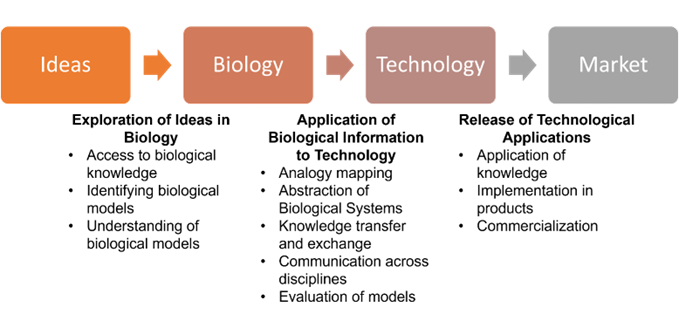
Figure 2. Shortcomings in the design process in the field of biomimicry and the difficulties underlying these shortcomings6. This diagram, which represents the process of studies in the field of biomimicry, mentions the difficulties and the importance of shortcomings in the transfer of theoretical knowledge into practice. It is thought that the shortcomings in the process should be eliminated to ensure continuity in biomimetic designs suitable for commercialization.
The field of biomimicry is an interdisciplinary field of study that follows the process of abstracting the information obtained through the analysis of biological models, transferring this abstracted information to the field of technology, and putting it into practice, aiming to solve complex problems, and which emerged by bringing together the disciplines of biology and technology7. For these reasons, in recent years, scientists have been interested in redesigning the structures and functions of cells, controlling the biological processes carried out by the cell at micrometer or nanometer scales, and benefiting from the field of biomimicry while redesigning (Figure 3)8. Designing the functions and structures of their cells helps us understand the molecular basis of their vital activity. The duplication of biological mechanisms provides a fundamental model for further promoting its application in fields such as artificial intelligence, unraveling the mechanisms underlying the occurrence of diseases, and exploring medical diagnoses or treatments. In addition, the connection of biological science with developing technology at many points attracts the attention of the scientific world. For these reasons, it is necessary to develop biomimetic systems to imitate the cells that constitute the most basic unit of life and the biological processes performed by the cells9.
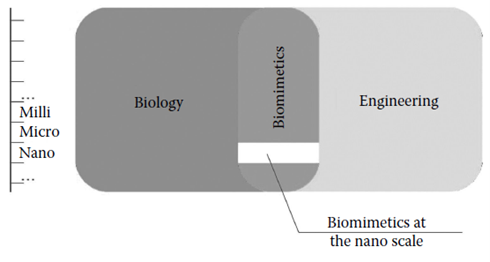
Figure 3. A field that emerged with the combination of biology and engineering, is biomimicry8. Biomimicry is an interdisciplinary branch of science that emerges by transferring information from biology to engineering to meet people’s problems and needs. Although nanoscale biomimicry has a small place in the field of nanotechnology, it has an important method.
In recent years, many studies have been conducted that are guided by the field of biomimicry, which can lead to new methods based on human health and used in scientific studies8. Some of them are as follows.In a 2017 study by Zhu and Xia, low-density lipoproteins (LDL) were reconstructed for use in drug delivery and theragnostic applications using a biomimetic approach. LDL, which is one of the four main lipoprotein groups used in vivo lipid transport, is emerging as a suitable carrier for the targeted drug release of theragnostic agents. Unlike synthetic systems, LDL particles are biocompatible and biodegradable with reduced immunogenicity and innate abilities to target cancerous cells, be recognized by the reticuloendothelial system, and evade elimination. Based on these properties, several strategies have been developed for the reconstitution of LDL particles, including conjugation to apolipoprotein and insertion to phospholipid (Figure 4). In this study by Zhu and Xia, research was conducted on the development of reconstructed LDL (rLDL) particles for use in theragnostic applications. The importance of rLDL particles, staging of progressive diseases, treatments of lesion tissues, and applications in the release of photosensitizers for photodynamic cancer therapy was also emphasized. According to the results obtained from these studies, it is expected to inspire more people to expand LDL applications in the field of biomedicine10.
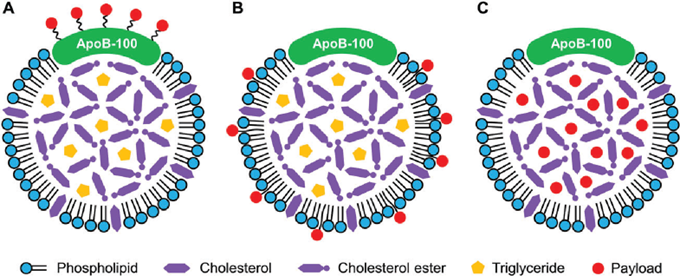
Figure 4. Two-dimensional drawings showing the three main strategies for LDL remodeling10. (A) Conjugation to apolipoprotein. (B) Insertion in a monolayer of phospholipid. (C) Loading into the hydrophobic core.
In the study of Li et al. 2018, they conducted studies on platelets and the biomimetics of platelets for use in regenerative medicine and cancer treatments. As is known, platelets is a blood cell which is circulating and is obtained from megakaryocytes. They play a significant role in metastasis, innate immunity, coagulation and hemostasis which have an important role in vital activities. By taking advantage of the basic properties of platelets, researchers have developed platelets and platelet-mimicking nano-assemblies to treat several diseases, especially various cancer diseases, wounds, and bacterial infections (Figure 5). The emergence of platelets and platelet-mimicking nanoparticles as a versatile technology for various drug delivery and regenerative medicine applications is seen as a promising field in the clinical sense in the future11. Researchers think that studies on platelet and platelet-mimicking nanoparticles should be increased to accelerate and improve the studies on pharmacokinetics, to find more reliable treatment methods, and to accelerate the clinical treatment stages. In addition, it is thought that diagnostic and immunomodulatory applications will be seen in a wider area with the emergence of more advanced studies12.
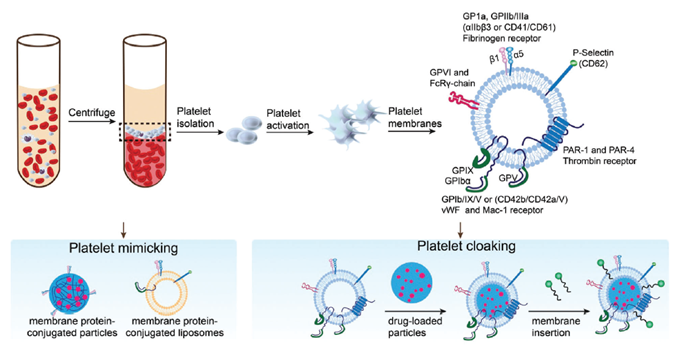
Figure 5. Production of platelet-like nanoparticles developed for use in the treatment of many diseases such as bacterial infection and cancer12. In this study conducted by Li et al., platelets were first collected by centrifugation. These platelets, which were then isolated, were activated. Then, the membranes of the platelets were prepared for use in further investigation.
In an article published by Shen et al. in 2019, they mentioned the biomimetic applications of DNA nanotechnology (Figure 6). As is known, imitation of cell structures and cell functions leads to various innovations in many fields from basic cell biology to biomedicine. The programmable self-assembly capability with the advent of DNA nanotechnology makes DNA an attractive candidate for the rational design of artificial components with different structures and functions. It shows that recreating the membrane channel with DNA nanotechnology is an attractive area for understanding questions about how channel proteins work. Otherwise, DNA-based chambered artificial systems can be built to mimic natural structures such as mitochondria, endoplasmic reticulum, lysosomes, and other organelles, which is one of the examples of applications of DNA nanotechnology in the field of biomimicry13. Today, most studies using DNA nanotechnology deal with simplified models. These simplified models pioneered the understanding of natural models. Understanding model systems will help to understand how life is sustained and the origins of disease9.
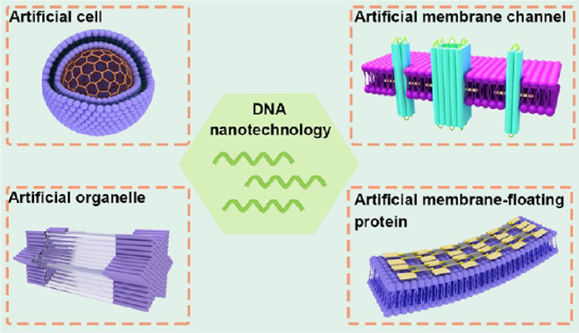
Figure 6. Applications of the biomimetic field developed using DNA nanotechnology9. Existing structures such as organelles, membrane channels, and membrane proteins in the cell and its components and the functions of these structures are imitated by utilizing the latest developments in DNA nanotechnology.
In 2020, Osorio et al. conducted a study on the biomimicry of microchannels for use in regenerative medicine treatments. While studies on artificial organs are increasing day by day around the world, regenerative medicine aims to develop organs that can replace their human counterparts. In this context, this study conducted in 2020 focuses on a new biomimetic-based methodology for incorporating microchannels into 3D nanocellulose (BNC-3D) biomaterials. Although BNC is a biomaterial used as a skeleton in cell culture studies, it does not have the micro-product structure that the tissues in the organ need to maintain viability. Accordingly, this study aims to mimic the micro product structure (blood vessels) in BNC using a porcine kidney eroded in the epoxy resin during BNC synthesis (Figure 7)9. According to the results of BNC and BNC microchannels examined using infrared analysis, thermogravimetric analysis, and various biological analyzes, it was observed that the biomaterials mimic the blood vessels of the reference organ. In addition, the chemical and morphological properties of BNC were not affected during the biomimetic process. When the behavior of the cell is examined, it has been proven that the viability of the cell is not affected by the incorporation of the microchannels and that the living cells adhere to the surface of the microchannels, reproduce their shape where they adhere, and migrate into the biomaterial up to 245 µm for 8 days of culture. As a result, it was concluded that BNC is a biomaterial with biomimicry potential in the field of regenerative medicine. More studies are needed to focus on the cultivation of endothelial cells in biomaterials to expand the use of biomaterials in kidney transplantations in the future14.
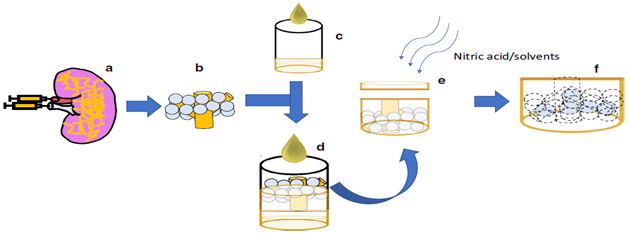
Figure 7. The development process of microchannels in 3D Nanocellulose (BNC-3D) biomaterial14. (A) Plastination of a porcine kidney using epoxy resin (a method of keeping it intact by coating it with a polymer applied to animals or humans who have lost their vital functions). (B) Preparation of microchannel and microsphere molds. (C) Production of the first BNC layer. (D) Growth of BNC in molds. (E) Removal of molds using nitric acid and solvents. (F) Obtaining the desired biomaterial.
In a study published by Muzychka et al. in 202116, a study was conducted on chitin skeletons loaded with bromotyrosine using marine biomimetics. Sea Sponges which belong to the order Verongiida are characterized with a special chemical protection strategy with the synthesis of approximate 300 derivatives of secondary metabolites called as bromotyrosine which is biologically active15. Sea Sponges have found for nearly 500 million years in our planet. Spherocytes which are found within the chitin skeletal fibers of sponges where it can be formed a field that is protective against bacteria, pathogenic viruses, and other predators and highly specialized are responsible for the production of bromotyrosines. Chitin fibers found in sponges are shown as a unique example of biomaterial as a source of substances with antibiotic properties16.
In this article published in 202116, a study using a water-based biomimetic approach is mentioned. Since sponges actively extrude bromotyrosines that can mix with the aqueous environment in their natural environment. Thus, 3,5-dibromo quinol acetic acid was obtained from an aqueous extract of dried demo Aplysina aerophobia. Then, the antimicrobial activity of this acid obtained and the antimicrobial activity of the same chemically obtained compound were compared. Compounds that are derived both synthetically and naturally have indicated antimicrobial properties against clinical strains of Enterococcus faecalis, Propionibacterium acnes and Staphylococcus aureus. The results obtained the study demonstrates that it can be used for production of bromotyrosines from the sponges aqueous extracts effectively16.
With the increase in research and development in the field of biomimetics in various disciplines, the possibility that the potential of the biomimetic approach to become a paradigm in various technological disciplines can be extended to other research and application areas is seen as an exciting development in the scientific world17. Thus, it leads to an increase in the tendency towards nature-inspired solutions regardless of the difficulty of the problems frequently encountered today. Studies in the scientific world continue at full speed to see how the new tools that will be produced using the biomimetic approach will cope with the current challenges and how they will be designed to support different user groups6.
Acknowledgment
Finally, we would like to thank you the author and the editor of the Turkish version for their contributions. The review article is available in Turkish on www.bioinforange.com.
References:
1. Fayemi, P. E., Wanieck, K., Zollfrank, C., Maranzana, N., & Aoussat, A. (2017). Biomimetics: Process, tools, and practice. Bioinspiration and Biomimetics, 12(1). https://doi.org/10.1088/1748-3190/12/1/011002
2. Bansode, S. S., Hiremath, R. B., Kolgiri, S., & Deshmukh, R. A. (2016). Biomimetics and Its Applications- A Review. International Journal of Emerging Technology and Advanced Engineering, 6(6), 63–72.
3. Clements-Croome, D. (2017). Biomimicry in architecture (2nd ed.). Intelligent Buildings International, 9(2), 120–120. https://doi.org/10.1080/17508975.2017.1309949
4. Lepora, N. F., Verschure, P., & Prescott, T. J. (2013). The state of the art in biomimetics. Bioinspiration and Biomimetics, 8(1). https://doi.org/10.1088/1748-3182/8/1/013001
5. Bhushan, B. (2009). Biomimetics: Lessons from Nature – an overview. Philosophical Transactions of the Royal Society A: Mathematical, Physical and Engineering Sciences, 367(1893), 1445–1486. https://doi.org/10.1098/rsta.2009.0011
6. Wanieck, K., Fayemi, P. E., Maranzana, N., Zollfrank, C., & Jacobs, S. (2016). Biomimetics and its tools. Bioinspired, Biomimetic and Nanobiomaterials, 6(2), 53–66. https://doi.org/10.1680/jbibn.16.00010
7. Graeff, E., Maranzana, N., & Aoussat, A. (2019). Biomimetics, where are the biologists? Journal of Engineering Design, 30(8–9), 289–310. https://doi.org/10.1080/09544828.2019.1642462
8. Gebeshuber, I. C., & Drack, M. (2018). Biomimetics: Biomimetics in Nanotechnology. CRC Concise Encyclopedia of Nanotechnology, 64–72. https://doi.org/10.1201/b19457-10
9. Shen, H., Wang, Y., Wang, J., Li, Z., & Yuan, Q. (2019). Emerging Biomimetic Applications of DNA Nanotechnology. ACS Applied Materials and Interfaces, 11(15), 13859–13873. https://doi.org/10.1021/acsami.8b06175
10. Zhu, C., & Xia, Y. (2017). Biomimetics: Reconstitution of low-density lipoprotein for targeted drug delivery and related theranostic applications. Chemical Society Reviews, 46(24), 7668–7682. https://doi.org/10.1039/c7cs00492c
11. Stenvinkel, P., Painer, J., Johnson, R. J., & Natterson-Horowitz, B. (2020). Biomimetics – Nature’s roadmap to insights and solutions for the burden of lifestyle diseases. Journal of Internal Medicine, 287(3), 238–251. https://doi.org/10.1111/joim.12982
12. Li, Z., Hu, S., & Cheng, K. (2018). Platelets and their biomimetics for regenerative medicine and cancer therapies. Journal of Materials Chemistry B, 6(45), 7354–7365. https://doi.org/10.1039/c8tb02301h
13. Seeman, N. C., Fan, C., Wang, S., Schanze, K., & Fernandez, L. (2019). Forum on Translational DNA Nanotechnology. ACS Applied Materials and Interfaces, 11(15), 13833–13834. https://doi.org/10.1021/acsami.9b04482
14. Osorio, M., Martinez, E., Kooten, T. V., Gañán, P., Naranjo, T., Ortiz, I., & Castro, C. (2020). Biomimetics of micro ducts in three-dimensional bacterial nanocellulose biomaterials for soft tissue regenerative medicine. Cellulose, 27(10), 5923–5937. https://doi.org/10.1007/s10570-020-03175-w
15. Laport, M., Santos, O., & Muricy, G. (2009). Marine Sponges: Potential Sources of New Antimicrobial Drugs. Current Pharmaceutical Biotechnology, 10(1), 86–105. https://doi.org/10.2174/138920109787048625
16. Muzychka, L., Voronkina, A., Kovalchuk, V., Smolii, O. B., & Wysokowski, M. (2021). Marine biomimetics : bromotyrosines loaded chitinous skeleton as source of antibacterial agents. Applied Physics A, 1–11. https://doi.org/10.1007/s00339-020-04167-0
17. Wanieck, K., Ritzinger, D., Zollfrank, C., & Jacobs, S. (2020). Biomimetics: teaching the tools of the trade. FEBS Open Bio, 10(11), 2250–2267. https://doi.org/10.1002/2211-5463.12963