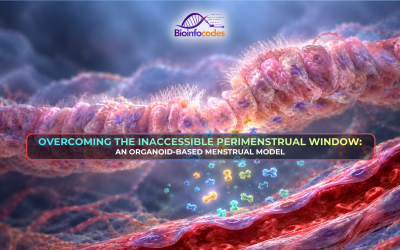
Overcoming the Inaccessible Perimenstrual Window: An Organoid-Based Menstrual Model
Menstruation involves cyclical shedding and scarless regeneration of the human endometrium, yet the cellular states and interactions that coordinate regeneration remain incompletely defined. Investigation of the perimenstrual window has been particularly challenging...
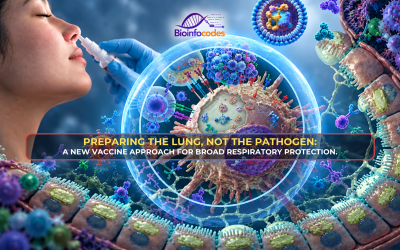
Preparing the Lung, Not the Pathogen: A New Vaccine Approach for Broad Respiratory Protection
Respiratory infections continue to pose a major public health challenge because viruses, bacteria, and other respiratory pathogens exhibit considerable diversity and variability . Classical vaccinology typically incorporates antigens derived from the target pathogens,...
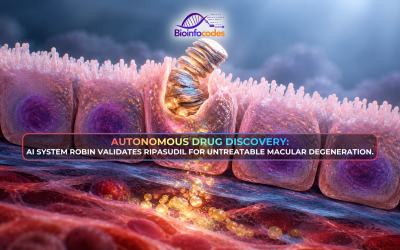
Autonomous Drug Discovery: AI System Robin Validates Ripasudil For Untreatable Macular Degeneration
Scientific discovery relies on an iterative process of observation, hypothesis generation, experimentation, and data analysis, yet integrating these stages into a single automated workflow remains challenging. The study introduces Robin, a multi-agent system designed...
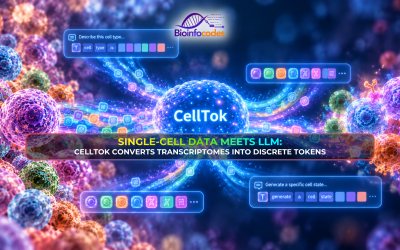
Single-Cell Data Meets LLMs: CellTok Converts Transcriptomes into Discrete Tokens
Single-cell transcriptomics provides detailed measurements of gene expression at cellular resolution; however, a single-cell transcriptome is a continuous, high-dimensional vector of expression values across thousands of genes, rather than discrete units that can be...
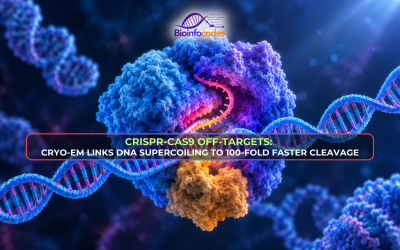
CRISPR-Cas9 Off-Targets: Cryo-EM Links DNA Supercoiling to 100-Fold Faster Cleavage
Clustered regularly interspaced short palindromic repeats (CRISPR) and CRISPR-associated proteins (Cas) serve as adaptive bacterial immune systems against viral infections and have been repurposed as powerful RNA-guided genome-editing tools for eukaryotic cells....
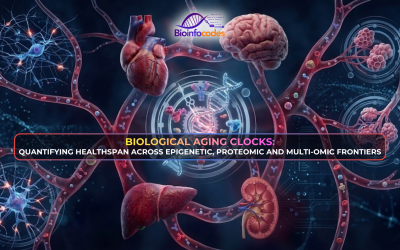
Biological Aging Clocks: Quantifying Healthspan Across Epigenetic, Proteomic, And Multi-Omic Frontiers
Human lifespan has nearly doubled over the past century, but healthspan has not kept pace, leaving more people worldwide affected by age-related cardiovascular disease, cancer, dementia and frailty. Longevity and rejuvenation research, once regarded as speculative,...
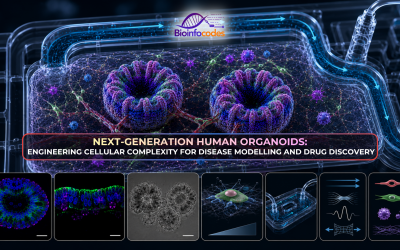
Next-Generation Human Organoids: Engineering Cellular Complexity For Disease Modelling And Drug Discovery
Human organoid technology has emerged as a powerful platform for studying human biology and disease in vitro. Organoids are self-organizing three-dimensional (3D) cellular structures derived from pluripotent stem cells (PSCs) or tissue-resident stem cells that...
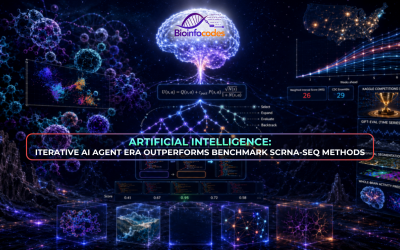
AI-Driven Scientific Software Development: ERA Automates Iterative Software Optimization
Computational methods have become essential for scientific research, supporting applications ranging from genomics to disease forecasting. However, developing high-performing scientific software often requires repeated experimentation and optimization. Although large...
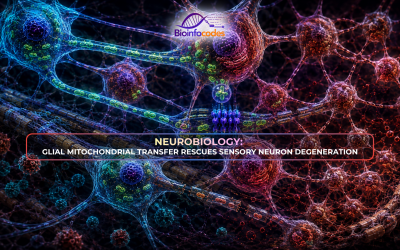
Neurobiology: Glial mitochondrial transfer rescues sensory neuron degeneration
Primary sensory neurons located in the dorsal root ganglia (DRG) possess long peripheral axons that can extend up to one meter, creating high bioenergetic demands that require continuous mitochondrial function. Because mitochondrial dysfunction contributes to axonal...
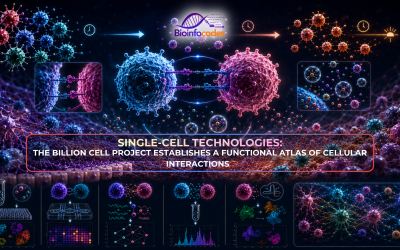
Single-Cell Technologies: The Billion Cell Project Establishes a Functional Atlas of Cellular Interactions
Understanding how individual cells interact to shape tissue function remains a central focus in multicellular biology and biotechnology. While recent advances in single-cell transcriptomics (the profiling of RNA expression in individual cells) and spatial profiling...