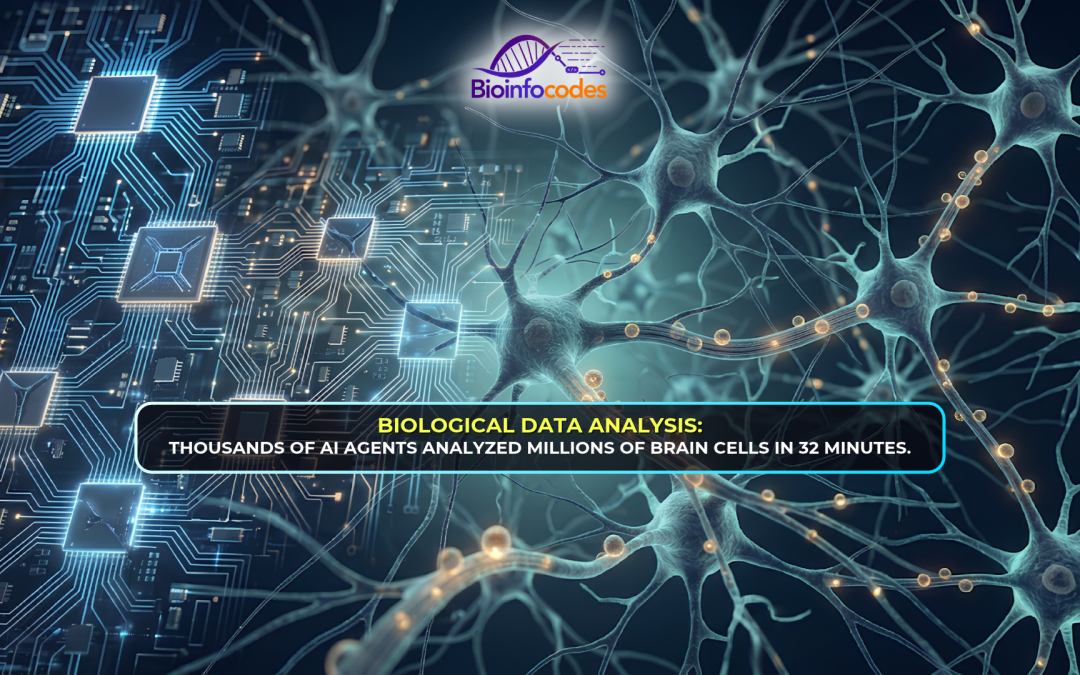
Understanding the molecular mechanisms of neurodegenerative diseases is an important area of research for identifying potential therapeutic targets. Experiments investigating the biological basis of these diseases can reveal the effects of thousands of genes and the responses of millions of cells across different brain cell types.However, making sense of these data requires correlating experimental findings with information published in various studies. The AI-assisted approach used by researchers from OpenAI, PerturbAI, and Scripps Research enables the simultaneous analysis of large-scale biological data, offering an alternative approach to investigating disease mechanisms and identifying biological connections that could guide future treatment research.
The main objective of the study is to identify biological connections worth investigating by correlating the changes induced by genetic perturbations in brain cells with the existing scientific literature. The researchers examined a whole-brain CRISPR atlas, a dataset showing how disruptions of gene function affect different cell types across the mouse brain. Thousands of AI agents powered by GPT-Rosalind evaluated different genetic perturbations in parallel, analyzed cellular responses, and examined relevant scientific publications to propose potential mechanisms.This approach establishes a research framework for identifying connections that might be overlooked among different biological processes in the investigation of complex diseases.
Another notable finding concerns differences between the Tsc1 and Tsc2 genes, which work together to regulate mTOR, a key regulator of cell growth, metabolism, and aging. While the disruption of both genes produces similar effects in certain neuronal groups, in the cerebellum, the disruption of the Tsc2 gene altered the activity of dozens of genes associated with neuronal communication, whereas the disruption of the Tsc1 gene led to very few changes. This finding indicates that genetic effects in specific brain regions can vary and that there are cellular alterations requiring more detailed investigation. The source notes that abnormalities in the cerebellum are strongly associated with TSC2 mutations in individuals with tuberous sclerosis. Although drugs that reduce mTOR activity can be used in the treatment of certain brain tumors and seizures, addressing disease-associated learning and behavioral difficulties remains a challenge. The cellular alterations identified by the researchers raise questions to investigate which effects current drugs can correct and which alterations may point to new therapeutic approaches.
By combining the analyses of the AI agents, the researchers created a reasoning atlas correlating genes, cellular effects, scientific publications, and potential biological mechanisms. The analysis was completed within 32 minutes on existing experimental data belonging to millions of mouse brain cells. According to OpenAI’s comparison, a human analysis of similar scope conducted by considering genetic perturbations one by one was estimated to take between months and a year. While agents working in parallel under the largest workload referenced over 700 scientific sources, a single agent evaluated under the same conditions utilized only 11 sources. In blind comparisons, expert researchers preferred the reports prepared by distributed agents 75% of the time compared to reports prepared by a single agent. These results support the approach’s capacity to examine relationships in large biological datasets and prioritize research hypotheses.
One of the study’s striking findings emerged during the examination of the DCTN1 gene, which is associated with Perry syndrome presenting with Parkinson’s-like symptoms. In the mouse brain data, disruption of Dctn1 increased the expression of genes involved in cholesterol production. The AI agents combined this finding with scientific information suggesting that impaired intracellular cholesterol transport could increase cholesterol production. Thus, whether the disruption in DCTN1 function alters cholesterol distribution in neurons and whether these changes contribute to neurodegeneration was proposed as a hypothesis worth investigating. This connection provides an example that can help examine disease-associated biological processes within a broader framework and identify new experimental questions.However, the proposed connection between DCTN1 and cholesterol has not yet been established as a disease mechanism or therapeutic target and requires experimental testing.
This study demonstrates that artificial intelligence can be evaluated as a research system capable of supporting the early stages of drug discovery, rather than a tool producing direct results in the treatment of neurodegenerative diseases. Analyzing large-scale biological data together with the scientific literature can help researchers propose new mechanisms, compare existing hypotheses, and prioritize candidates to be tested in the laboratory. For diseases such as Alzheimer’s and Parkinson’s, this approach can assist in determining disease-associated biological connections and developing hypotheses that can guide future therapeutic research. The current findings are based on the analysis of data obtained from mouse brain cells, and the proposed biological mechanisms must be tested with laboratory experiments. Therefore, the study does not reveal that it has developed a new treatment for these diseases, but rather demonstrates the applicability of a method that enables the faster identification of biological connections that can guide future treatment research.
Translated by: Elinsu Ak
Editor: Hazel Birgül
Reference: OpenAI. Using thousands of AI agents to uncover new leads in biological data. October 21, 2026. https://openai.com/index/scaling-ai-research-for-complex-biological-data/