
48 Hours Without Lungs: Sustaining Life with Total Artificial Lung Support
In cases of septic shock arising from severe Acute Respiratory Distress Syndrome (ARDS) accompanied by necrotizing pneumonia (pneumonia characterized by the death of lung tissue), mortality rates can exceed 80%. Within this clinical context, lung transplantation is...
A New Perspective on 98% of the Genome: Interpreting Non-Coding Variants with AlphaGenome
Interpreting the biological effects of genetic variation is regarded as one of the fundamental challenges of modern biology. More than 98% of the variations in the human genome reside within protein non-coding regions, and these variants can influence gene expression,...
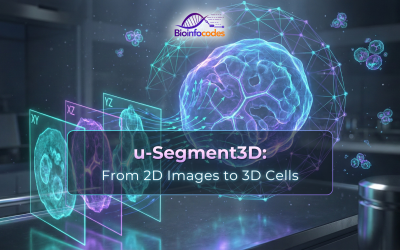
u-Segment3D: From 2D Images to 3D Cells
Reliable analysis of biological data obtained through microscopy is largely dependent on accurate cell segmentation. Thanks to new-generation deep learning (DL) technologies, two-dimensional (2D) cell segmentation offers generalised solutions across various cell types...
gReLU: Establishing a New Standard in AI-Driven Genome Engineering
Artificial intelligence (AI), and particularly deep learning (DL), holds transformative potential for the biological sciences, spanning applications from genetic engineering to disease diagnosis and therapeutic development. DL models trained on DNA sequences can...
“Brain Drain” in AI: The Cost of Moving from Academia to Industry
The accelerating migration of Artificial Intelligence (AI) research into industry has raised concerns within academic circles. This trend has prompted the question of whether academia can continue to steer advancements in AI and counterbalance the growing influence of...

Is Sex Distribution at Birth Not a Matter of Chance? New Findings Reveal Genetic Tendencies
Sex determination has long been explained using the “heads or tails” analogy. However, new findings show that the issue is not that simple. Siwen Wang and her team at Harvard University and Brigham and Women’s Hospital examined 146,064 births (excluding twin and...
Excised DNA Circles: The Missing Link in Leukemia Relapse
Once again, the DNA segments previously considered “junk” have been shown to possess a significant biological function, actively contributing to the recurrence of leukemia. This recent discovery focuses on non-coding DNA, specifically excised DNA circles (ESCs), which...
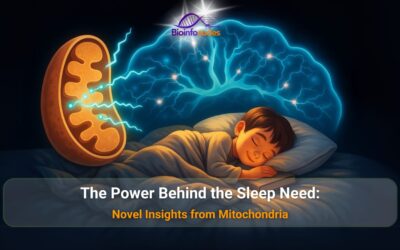
The Power Behind the Sleep Need: Novel Insights from Mitochondria
Researchers at Oxford University conducted an important study on the Drosophila (fruit flies) in order to understand the biological importance of sleep. As a result, they discovered that sleep deprivation directly challenges the function of mitochondria, which are the...
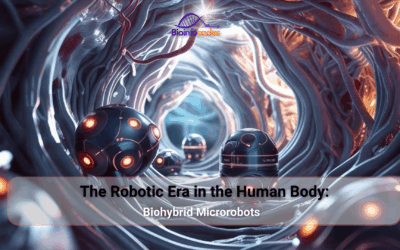
The Robotic Era in the Human Body: Biohybrid Microrobots
Robot technology is now used in many fields. Did you know that it is also used in the human body? Over the past 20 years, many microrobots have been developed and used to intervene in anatomically difficult-to-reach areas of the human body. The microrobots used have...
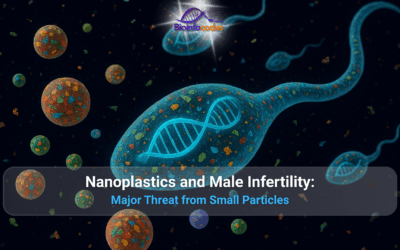
Nanoplastics and Male Infertility: Major Threat from Small Particles
Over the last decade, microplastics and nanoplastics (NPs) have emerged as a global concern. Our former world seems to be normalizing the plastic usage to the extent of little particles accumulating in human bodies. Among these, nanoplastics, which are particles...