Scorpion stings represent a significant global public health problem that affects children most severely and leads to the loss of thousands of human lives each year. The high cost of current antivenom production and the limited access to these products in certain regions highlight the need for more accessible therapeutic approaches. In this context, the potential of artificial intelligence-based systems to accelerate drug discovery processes is being investigated.
This research aimed to test whether artificial intelligence models could design de novo (from scratch) protein binders against medically important scorpion neurotoxins. Although scorpion neurotoxins show similarity in terms of overall protein fold structures, the sequence identity between their amino acid sequences ranges only between 26–62%. These toxins, selected from different geographic regions, create a challenging test for designing protein binders targeting multiple toxins. Researchers aimed to evaluate the performance of AI-mediated autonomous design processes and their verifiability in a laboratory environment against these complex target structures.
In the study, the AI model Claude, operated with considerable autonomy, using protein-design and structure-prediction tools under human supervision and with four follow-up prompts. . The model selected target toxin structures and binding regions (hotspots), set quality thresholds for designs, and decided how to utilize the available design tools. The study, conducted with four additional prompts, resulted in the preparation of a final list of 180 designs 64 hours after the initial command was given. In this process, 318,484 protein designs were generated, and 553,052 design-toxin pairs were computationally screened. Subsequently, 31 designs were added to the 180 designs selected in the first stage, yielding a total of 211 designs. These designs were tested in the laboratory by Adaptyv Bio and Twist Bioscience.
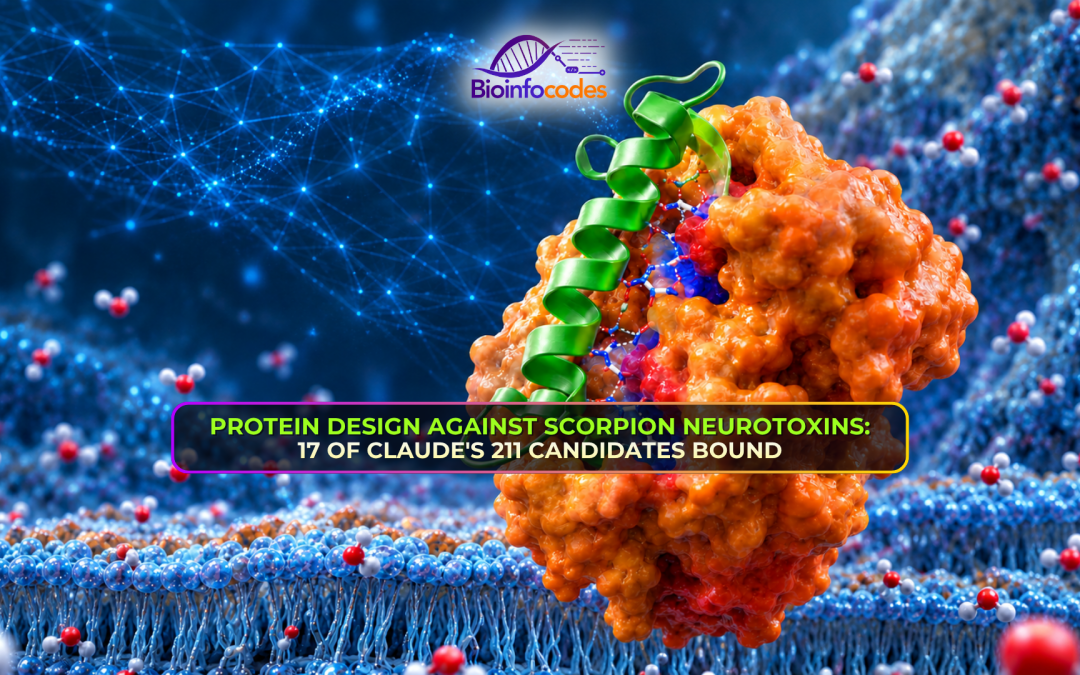
As a result of the laboratory tests, 17 out of the 211 designs were confirmed to meet the specified binding criteria; each of these designs succeeded as a binder against a single toxin. Among the 60 designs targeting individual toxins, 11 met the binding criteria, corresponding to an 18% success rate. However, multi-binder design strategies intended to bind multiple toxins simultaneously failed to achieve success at this stage. One of the strongest binders, Cn2-B1, demonstrated affinity at the single-digit nanomolar level against the Cn2 neurotoxin. Competition experiments suggest that the Cn2-B1 and Cn2-B2 binders may bind to the same or a nearby region as the LR antibody, which has been reported to neutralize Cn2 in mice. These findings demonstrate that AI agents can design protein binders against complex biological targets and that this approach carries the potential to accelerate the early stages of drug discovery. It has not yet been tested whether these designs neutralize the toxin in a cellular environment and exert a protective effect in live animals. Therefore, although it has been shown that the proteins in question are candidates that could enable the development of an antivenom, it cannot yet be said that an antivenom has been obtained. The binding results were obtained not with toxins purified from scorpion venom, but with recombinant toxins produced in the laboratory from the genes of the respective toxins. The study constitutes an early step for future research to be conducted through the collaboration of artificial intelligence and biotechnology.
Translated by: Elinsu Ak
Editor: Hazel Birgül