
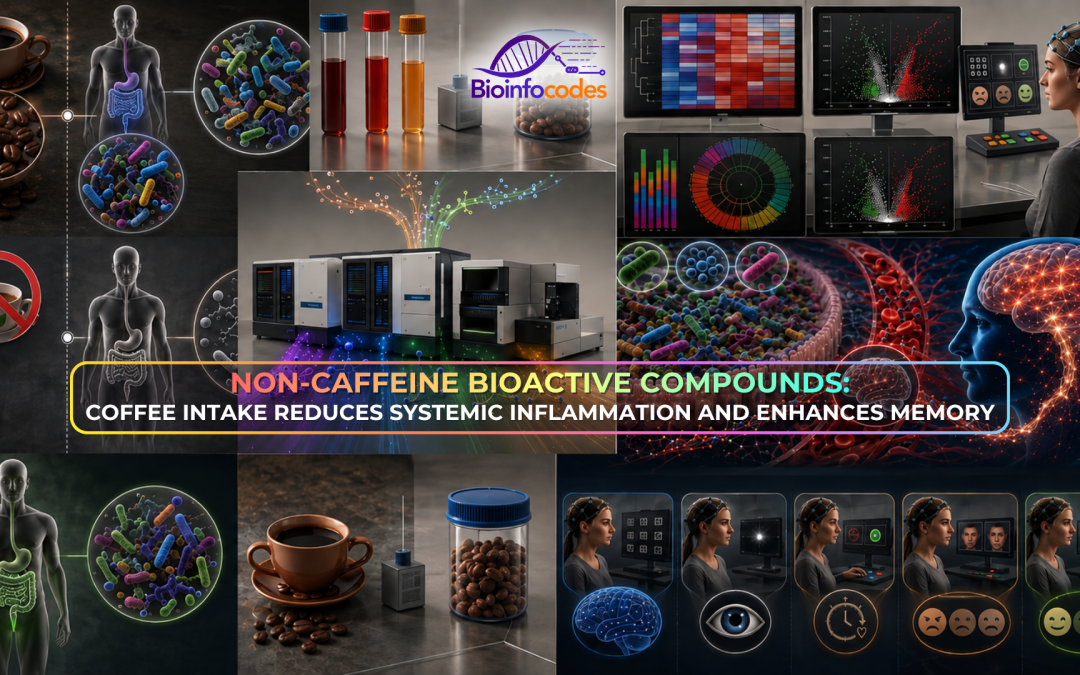
Understanding the interactions between dietary habits, the gut microbiome (the community of microorganisms living in the digestive tract), and host physiology is a central focus in modern biomedical research. Dietary components can alter microbial populations and their metabolic output, which may influence systemic inflammation and brain function. Coffee is widely consumed worldwide and contains caffeine as well as polyphenols (plant-derived compounds with potential antioxidant properties). Despite its prevalence, the precise impact of habitual coffee intake, withdrawal, and subsequent reintroduction of caffeinated versus decaffeinated coffee on human gut microbiota, neuroactive metabolites, and cognitive performance remains poorly defined.
To address this gap, researchers investigated how regular coffee consumption and its withdrawal influence gut microbial taxonomy, neuroactive metabolic profiles, systemic inflammatory markers, and cognitive-behavioral measures. The study sought to delineate the contributions of caffeine versus non-caffeine constituents by evaluating individuals during habitual intake, following a 14-day coffee abstinence period, and after the controlled reintroduction of either caffeinated or decaffeinated coffee. By comparing habitual coffee drinkers to non-coffee controls, the researchers aimed to determine whether physiological and cognitive shifts were reversible and specifically linked to coffee consumption.
The study compared habitual coffee drinkers with non-coffee drinking controls across a baseline phase, a 14-day abstinence period, and a reintroduction phase of either caffeinated or decaffeinated coffee. Biological samples (stool, urine, and blood) were collected to analyze bacterial taxa via 16S rRNA gene sequencing (a molecular method used to identify and quantify bacterial populations) and targeted metabolomics (the analytical measurement of specific small-molecule metabolites). Host physiological and psychological parameters were assessed using immune biomarker assays, whole-blood stimulation tests, salivary cortisol sampling, and cognitive test batteries measuring memory, learning, and mood states.
Habitual coffee intake was characterized by a higher relative abundance of specific bacterial taxa, including Cryptobacterium curtum, Eggerthella species, and Firmicutes CAG:94. These populations decreased after 14 days of abstinence but were restored following the reintroduction of either caffeinated or decaffeinated coffee, indicating a caffeine-independent microbial response. Coffee drinkers exhibited lower fecal concentrations of neuroactive compounds such as γ-aminobutyric acid (GABA, a major inhibitory neurotransmitter), lower C-reactive protein (CRP, an inflammatory marker), and higher levels of the anti-inflammatory cytokine interleukin-10 (IL-10). Furthermore, the reintroduction of decaffeinated coffee led to significant improvements in episodic memory and paired-associates learning, showing that noncaffeine constituents support cognitive performance.
These findings indicate that regular coffee consumption induces reversible modifications in the human gut microbiome and associated metabolic pathways independent of caffeine content. By demonstrating that non-caffeine bioactive compounds influence specific gut bacterial species, reduce inflammatory markers, and enhance memory and learning, the study highlights the multifaceted biological activity of coffee constituents. These results support the interpretation that non-caffeine components in coffee play a measurable role in shaping host-microbe interactions and neurocognitive functions.
Author: Ezel Özerdem
Editor: Elinsu Ak
Reference: Cryan, J., et al. (2026). Habitual coffee intake shapes the gut microbiome and modifies host physiology and cognition. Nature Communications, 17, 3439. https://doi.org/10.1038/s41467-026-71264-8
-Bioinfocodes Scientific News Service-
News articles prepared by our team members, reviewing and compiling scientific research
published in journals with and impact factor greater than 20 (click here for the list)