
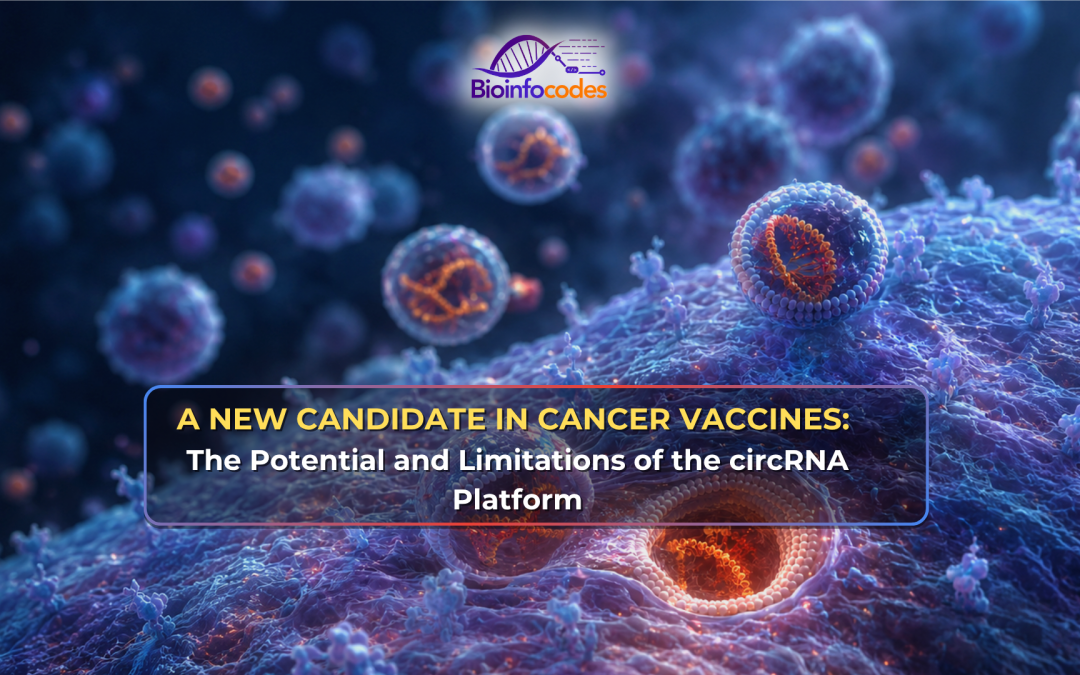
mRNA vaccines, together with the COVID-19 pandemic, rapidly transformed from a laboratory setting into a global public health tool; this success has opened the way for new development efforts directed at cancer immunotherapy, respiratory vaccines, and infectious diseases such as HIV and malaria. This momentum has also brought along increased interest in next-generation RNA platforms, and circular RNA has taken the lead among these platforms. circRNAs, which were initially regarded as erroneous by-products of splicing (the RNA processing pathway), through high-throughput sequencing technologies, they have been shown to be evolutionarily conserved, physiologically functional structures that are widely present in eukaryotic cells. The editorial points out that the translation efficiency of existing IRES sequences is weaker compared to linear mRNA platforms; this reveals that artificial and optimized synthetic IRES engineering is needed in order to overcome this issue. In addition, the distinctive three-dimensional conformation of circRNA also makes it necessary for the existing LNP (lipid nanoparticle) formulations used to deliver these molecules into cells to be re-optimized.
Nevertheless, the clinical success of circRNA platforms appears to depend on the effectiveness of translation mechanisms at the cellular level. Unlike the natural cap structure found in linear mRNA molecules, circRNA molecules require IRES (Internal Ribosome Entry Site) sequences to be integrated into their structure in order to be recognized by the ribosome.
The article evaluates the current status, potential, and clinical uncertainties of circRNA vaccines. The fundamental question is: can circRNA become a genuine alternative to mRNA, or will it remain merely a niche platform for certain applications? In particular, it is questioned whether the molecular stability of circRNA will translate into clinical gains, and whether it can replace the well-performing mRNA platforms.
The study states that, over the past decade, researchers have succeeded in designing circRNAs to enable continuous protein production in mammalian cells. It has been reported that, in some mouse studies, vaccines containing small circRNAs were able to produce longer-lasting stability and stronger immune responses compared to vaccines containing mRNA or stabilized mRNA. It has been reported that a circRNA neoantigen vaccine (a personalized vaccine against tumor-specific mutations) combined with anti-PD-1 therapy increased the tumor infiltration of CD8+ T cells and suppressed tumor growth in a mouse colon adenocarcinoma model. However, the researchers emphasize that the great majority of these studies have remained limited to mouse models and that direct comparisons with mRNA vaccines are still insufficient.
The researchers suggest that circRNA’s strongest clinical potential lies in cancer vaccines; however, this assessment is based not on a proven superiority but on the overlap between the requirements of cancer immunity and the theoretical properties of circRNA. While infectious disease vaccines rely on rapid and short-term antibody production, cancer vaccines require continuous antigen presentation and strong cytotoxic T cell responses in order to overcome the tumor’s immunosuppressive environment. On the other hand, the fact that circRNA vaccines have not yet reached the clinical research stage is regarded as an important limitation. This is due to the facts that scalable production has not yet been demonstrated, that a clear superiority over mRNA platforms has not been established, and the concern that its long-lived structure may carry unknown safety risks. Indeed, the uncircularized linear residues that remain in the environment after in vitro transcription (laboratory-based artificial RNA production) carry the risk of triggering severe inflammatory immune responses in the body; this situation necessitates costly liquid chromatography steps. In addition to these technical challenges, the strict patent barriers that leading firms have established over circularization mechanisms are considered another factor that legally restricts the R&D processes of new entrants. The study emphasizes that whether circRNA will turn into a widespread platform in vaccine development depends on the results to be obtained in the transition from mouse models to human studies.
Translated by: Nehir Necem Ünlü
Editor: Elinsu Ak
Reference: Nature Biotechnology Editorial. Circling back to RNA vaccines. Nature Biotechnology 44, 673–674 (2026).https://doi.org/10.1038/s41587-026-03155-8
-Bioinfocodes Scientific News Service-
News articles prepared by our team members, reviewing and compiling scientific research
published in journals with and impact factor greater than 20 (click here for the list)